
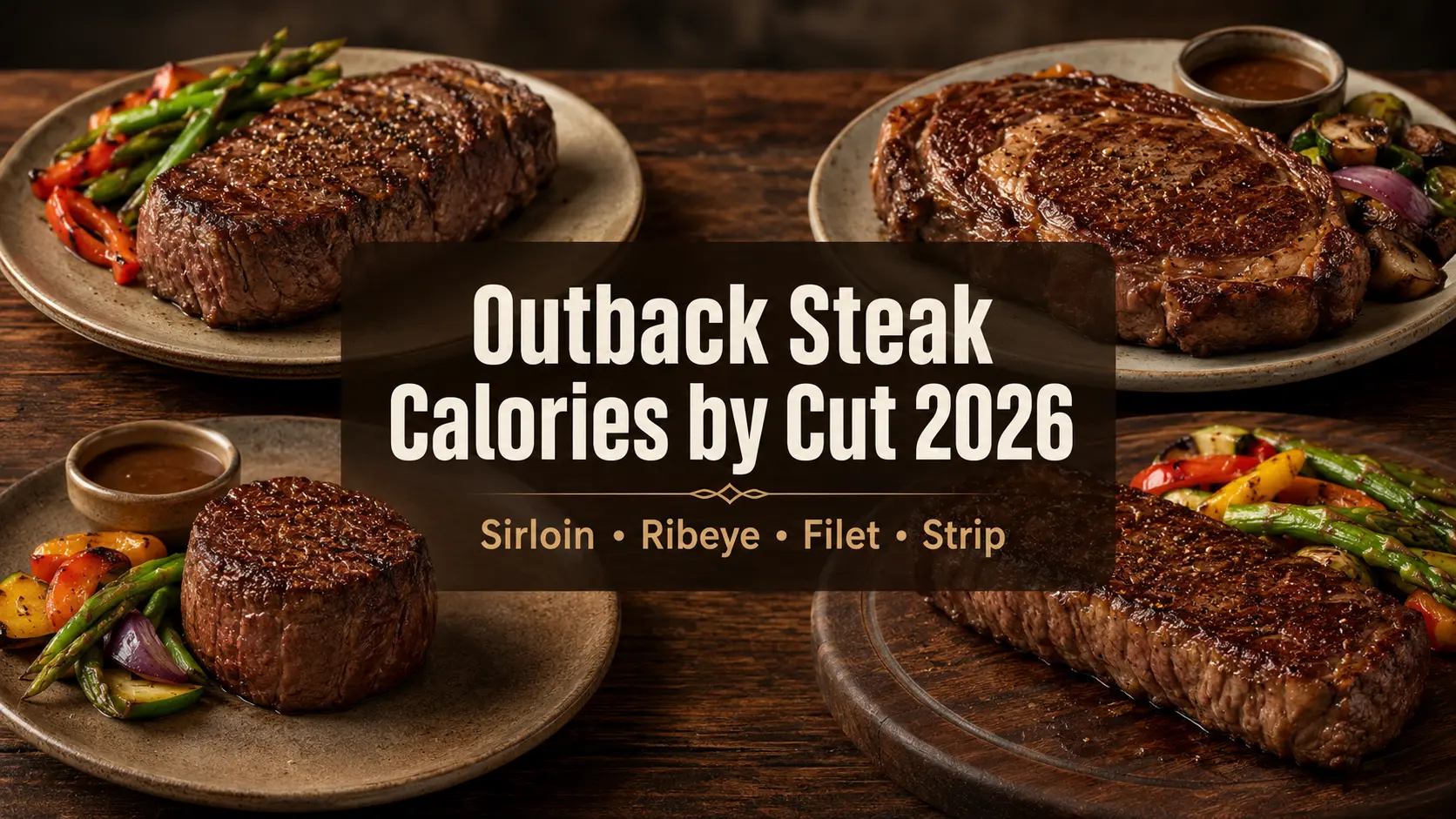
Outback Steak Calories by Cut 2026
Outback steak calories depend on more than the name of the cut. Portion size, marbling, cooking method, seasoning, butter, sauce, toppings, and side choices can all change the meal. This independent guide explains how to compare sirloin, ribeye, filet, New York strip, and other steak options using current first-party nutrition information.
Nutrition and location disclaimer: Calories, steak sizes, cooking methods, toppings, sauces, sides, recipes, seasonal items, and availability may vary by location and can change. Check the current official nutrition resource and the menu for your selected restaurant. This article offers general planning information, not medical or personalized dietary advice, and makes no diet or health guarantees.
Quick Answer: Which Outback Steak Has the Fewest Calories?
A smaller center-cut sirloin is often a useful lower-calorie steak to compare because sirloin is generally leaner than a similarly sized, heavily marbled ribeye. That is a comparison pattern, not a fixed result. The exact current cut, listed weight, standard preparation, and included extras determine the published calorie total.
For an accurate comparison, match the exact steak name and ounces on the local menu to the latest Outback nutrition menu guide. Then account for butter, toppings, sauces, add-on proteins, and every side rather than comparing the steak alone.
Outback Steak Calories Overview
Two steaks of the same weight can have different calorie totals. A ribeye normally has more internal marbling than sirloin, while filet is valued for tenderness and may be offered in a smaller portion. New York strip generally falls between very lean and heavily marbled cuts, but the actual steak and preparation still matter.
Size also changes the comparison. A larger portion of a relatively lean cut can exceed a smaller portion of a richer cut. Published steak weights may describe the uncooked portion, while nutrition information describes a standardized menu serving. Use the definitions in the current official resource rather than calculating calories from ounces alone.
The entrée total may not be the steak-only total. A menu or nutrition entry can include a standard preparation or accompaniments, and sides may be listed separately. Read the item name, serving description, and footnotes before adding components.
Steak Calories by Cut Comparison
| Steak cut or style | General calorie pattern | Main variables | What to verify |
|---|---|---|---|
| Center-cut sirloin | Often among the leaner steak cuts at a comparable size | Portion weight, seasoning, cooking fat, butter, and toppings | Exact ounces and whether the listing includes the standard preparation |
| Filet or tenderloin-style steak | Generally lean and often served in a modest portion | Size, butter, sauce, bacon or specialty preparation | Exact named item rather than a generic filet value |
| New York strip | Usually a middle-range choice for marbling at comparable weights | Fat edge, portion size, cooking fat, seasoning, and toppings | Current steak weight and complete standard preparation |
| Ribeye | Typically higher than a similarly sized leaner cut because of marbling | Internal fat, steak size, bone, butter, and add-ons | Boneless or bone-in item, listed ounces, and included extras |
| Bone-in ribeye or large specialty steak | Often among the higher-calorie steak servings | Large listed size, marbling, edible portion, and preparation | Exact current item and how its serving is defined |
| Porterhouse or another large bone-in cut | Often substantial because of its total portion | Cut composition, bone-in weight, visible fat, and toppings | Current availability, portion description, and official calorie entry |
| Steak combination entrée | Can exceed the steak-only choice when another protein or sauce is added | Steak size, second protein, preparation, sauce, and sides | Whether components are combined or separately listed |
This table gives relative, category-level guidance rather than unofficial fixed calorie counts. Compare exact current menu items in official Outback nutrition resources before ordering.
Lower-Calorie Steak Cut Options to Compare
A smaller sirloin is commonly the first cut to compare for a calorie-conscious order. A modest filet portion may also compare favorably with a larger or more marbled steak, provided rich toppings and sauces are not added. Neither cut is automatically a low-calorie meal once the complete plate is counted.
- Compare equal portions where possible: A cut comparison is more meaningful when the listed weights are similar.
- Start with the smallest suitable size: A smaller serving generally contains fewer calories than a larger serving of the same preparation.
- Choose a simpler build: Check the standard steak before adding butter, cheese, bacon, creamy sauce, or another protein.
- Review the complete plate: A leaner steak with two rich sides can produce a higher meal total than expected.
See the broader Outback low-calorie meals guide for ways to compare steak with non-steak entrées. “Lower calorie” is relative to the choices and serving sizes being compared; it is not a medical recommendation.
Higher-Calorie Steak Cut Options to Check Carefully
Ribeye, bone-in ribeye, porterhouse, and other large or highly marbled cuts commonly merit closer review. Marbling adds richness and energy, while a large serving raises the total amount of steak. A specialty topping or add-on can increase the entrée further.
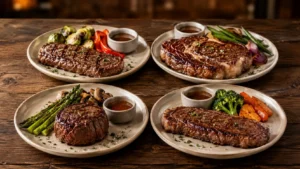
A higher-calorie cut is not inherently a poor choice. It may fit a diner’s preferences or plan, but it should be compared using the whole serving. Avoid assuming that leaving the bone or visible fat uneaten creates a precise new total; without measured information, that custom amount is unknown.
Sirloin Calorie Notes
Outback sirloin calories change with the offered portion. Sirloin is typically less marbled than ribeye, which can make a smaller center-cut sirloin a practical starting point for comparing steak calories. Still, steakhouse seasoning, cooking fat, butter, toppings, and sides belong in the full calculation.
Match the ounces exactly. Do not apply the calorie listing for one sirloin size to another or assume calories increase in a perfectly straight line, because preparation and serving definitions may differ. Combination entrées also need the second protein and its sauce counted.
Ribeye Calorie Notes
Outback ribeye calories are commonly higher than sirloin calories at a similar serving weight because ribeye has more marbling. That fat contributes flavor and affects the nutrition profile. Bone-in and boneless versions should be treated as distinct menu items rather than compared by name alone.
Check whether the nutrition entry covers the steak’s usual seasoning or finishing fat. Then add any topping, sauce, side, or protein upgrade that is listed separately. Asking for a modification may change what is served, but an exact customized calorie total should not be claimed unless the restaurant publishes one.
Filet and New York Strip Calorie Notes
Filet
Filet or tenderloin is generally leaner than ribeye and is often offered in a smaller-looking portion. Those features can make it worth comparing for calorie-conscious diners who prioritize tenderness. A bacon-wrapped, butter-topped, sauced, or combination preparation is nutritionally different from a simply prepared filet.
New York Strip
New York strip usually has more marbling than sirloin and less than a heavily marbled ribeye, although individual steaks vary. Its calorie position depends heavily on the offered weight. Check the current Outback New York strip calorie entry instead of treating “strip steak” as a standard size across restaurants.
The Outback steak prices by cut guide can help compare price, portion, texture, and value separately from calories.
Steak Toppings, Butter, Sauces, and Add-Ons
Toppings and add-ons can add many calories beyond the steak itself. Seasoned butter, creamy sauces, cheese, bacon, sautéed mushrooms or onions prepared with fat, seafood toppings, and an added protein all need attention. A small-looking topping may be energy-dense.
| Extra | Why it changes the total | Useful question |
|---|---|---|
| Finishing butter or cooking fat | Adds fat even when it is not visually prominent | Is it part of the published standard preparation? |
| Creamy or cheese-based sauce | Can add fat and other calorie-dense ingredients | Is the sauce included or listed as a separate serving? |
| Bacon, cheese, or loaded topping | Adds another concentrated layer to the steak | Does the nutrition resource list the complete topped item? |
| Mushrooms or onions | Cooking oil, butter, or sauce may matter more than the vegetables | How is the topping prepared and portioned? |
| Shrimp, chicken, or another protein | Adds its own portion, cooking fat, breading, or sauce | Are the add-on and sauce calories published separately? |
Ordering sauce or butter on the side can help control the amount used, but the calorie reduction depends on how much remains uneaten. Avoid subtracting the full published serving unless none of it was consumed and the official listing confirms it was separate.
Side Choices Can Change Total Calories
The steak is only one part of the entrée. Fries, a loaded baked potato, macaroni and cheese, creamy soup, or a salad with cheese, croutons, and dressing can add many calories. Vegetables can be a lighter-style comparison, but butter or oil still counts.
- Plain or simply prepared vegetables: Ask about butter, oil, and seasoning.
- Side salad: Count dressing, cheese, croutons, bacon, and other toppings.
- Baked potato: Butter, sour cream, cheese, and bacon can substantially change the total.
- Fries and rich sides: Use the published side serving rather than estimating from the plate.
- Soup: Confirm the variety and serving size; recipes differ.
Appetizers and beverages can change the meal before the steak arrives. Compare the Outback appetizer calories guide and Outback drink calories guide when planning the complete order.
Best Steak Choices for Calorie-Conscious Diners
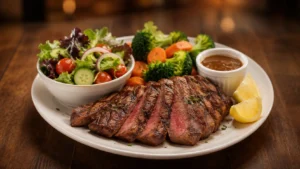
The strongest starting point is often the smallest suitable sirloin in its standard preparation, followed by a modest filet when available. Compare both against the exact strip and ribeye portions rather than relying only on the cut name.
- Choose the restaurant and open its current menu.
- Identify the smallest steak portion that suits the meal.
- Match that exact item to current official nutrition information.
- Compare a simply prepared sirloin or filet with richer, larger cuts.
- Add the calories for chosen sides, sauces, toppings, and drinks.
No single steak is “always the healthiest” because needs differ and menus change. Calories are only one nutrition measure; sodium, saturated fat, protein, allergens, and individual dietary needs may also matter.
Best Steak Choices for High-Protein Diners
Steak is a protein-rich food, but the highest-protein menu item is not necessarily the most calorie-conscious. A larger steak generally supplies more protein and more total calories. Compare protein per complete serving alongside calories, saturated fat, sodium, toppings, and sides in the official nutrition resource.
A leaner sirloin can offer a useful protein-to-calorie comparison, while filet may combine tenderness with a relatively lean cut. Ribeye can still provide substantial protein, but its marbling commonly raises calories. For more comparisons, visit the Outback high-protein menu options guide.
Smart Steak Ordering Tips
- Select a location first. Menu items, sizes, seasonal choices, and availability can differ.
- Compare exact ounces. Do not compare a small sirloin with a much larger ribeye as though cut were the only variable.
- Read the complete description. Look for butter, glaze, crust, cheese, bacon, sauce, and combination proteins.
- Keep extras separate when possible. Sauce or dressing on the side can provide portion control, without guaranteeing a specific calorie reduction.
- Choose sides intentionally. Compare simply prepared vegetables or salad configurations with loaded and fried sides.
- Count every course. Include appetizers, bread, drinks, sauces, sides, and dessert in the meal plan.
- Avoid false precision. Do not invent a customized total when the restaurant has not published one.
- Recheck before ordering. Nutrition files, recipes, sizes, and limited-time offerings can change.
Use the Outback dinner menu with prices or Outback lunch menu with prices to review meal choices, then verify all details on the local official menu.
What to Check Before Ordering
- The exact steak name, current listed weight, and whether it is bone-in
- The calorie serving definition and whether it covers the standard preparation
- Marbling, cooking fat, seasoning, butter, crust, sauce, and toppings
- Whether a combination protein or add-on is included in the listed total
- The calories and serving sizes for both selected sides
- Whether a customization has published nutrition information
- Current allergen and ingredient guidance when relevant
- Seasonal availability and local menu differences
Nutrition information does not resolve every allergy question. Review the current official allergen resource and ask restaurant staff about ingredients and kitchen procedures when an allergy is relevant. Cross-contact may be possible, and this page cannot determine whether an item is safe for an individual.
If price also matters, compare the Outback best-value meals guide and best Outback meals under $15. Price, calories, protein, and portion size are separate measures. More independent planning resources are available on the OutbackMenuPrice.com homepage.
Frequently Asked Questions
What is the lowest-calorie steak at Outback?
A smaller center-cut sirloin is often a leading option to compare because it is generally leaner than a similarly sized ribeye. A modest filet may also compare well. Verify the current item, exact size, standard preparation, and full plate in official nutrition information.
How many calories are in an Outback sirloin?
There is no single sirloin total because more than one portion or preparation may be offered. Match the exact center-cut sirloin size on the selected restaurant’s menu to the current official nutrition entry, then account for toppings and sides.
Does Outback ribeye have more calories than sirloin?
At similar weights and preparations, ribeye typically has more calories because it contains more marbling. Actual menu portions may differ, so compare the exact named steaks and sizes rather than relying on that general pattern alone.
Is filet lower in calories than New York strip?
Filet is generally a lean cut and may be offered in a smaller portion, but the result depends on the exact weights and preparations. A larger filet or a rich topping can change the comparison. Use current first-party entries for both named items.
Do Outback steak calories include the sides?
It depends on how the nutrition resource defines each listing. Steak and side components may appear separately. Read the serving description and add both chosen sides, along with sauces and toppings, when they are not included.
Does ordering steak without butter reduce calories?
Using less butter can reduce calories when butter is part of the standard preparation. The exact difference depends on the published serving and what the kitchen changes. Do not claim a precise customized total unless Outback provides one.
Does steak doneness change the calories?
Doneness changes moisture and cooked weight, but the original cut, portion, marbling, and added cooking fats are usually more useful menu-comparison factors. Use the restaurant’s standardized entry rather than assigning a new calorie number based only on doneness.
Are the calorie comparisons in this guide official counts?
No. This is an independent planning guide with relative comparisons and no fixed calorie claims. Use the latest official Outback nutrition information and the menu for the selected location for current first-party figures.
Sources & Official References
Use these first-party resources to verify current steak names, portion sizes, standard-serving calories, allergen guidance, and local availability. Select a restaurant where prompted.
- Official Outback menu — review current categories, item descriptions, sides, and add-ons.
- Official Outback steak or dinner menu section — select the steak category for the chosen restaurant when available.
- Official Outback nutrition resources — verify current calories, protein, nutrients, and serving definitions.
- Official Outback allergen resources — review current allergen guidance when relevant.
- Official Outback locations page — choose a restaurant and confirm its menu and availability.
Editorial note: Official resources and local menus can change. This independent article explains a comparison method and should not replace current first-party nutrition, ingredient, or allergen information.







2 Comments
Comments are closed.