Outback High Protein Menu Options 2026
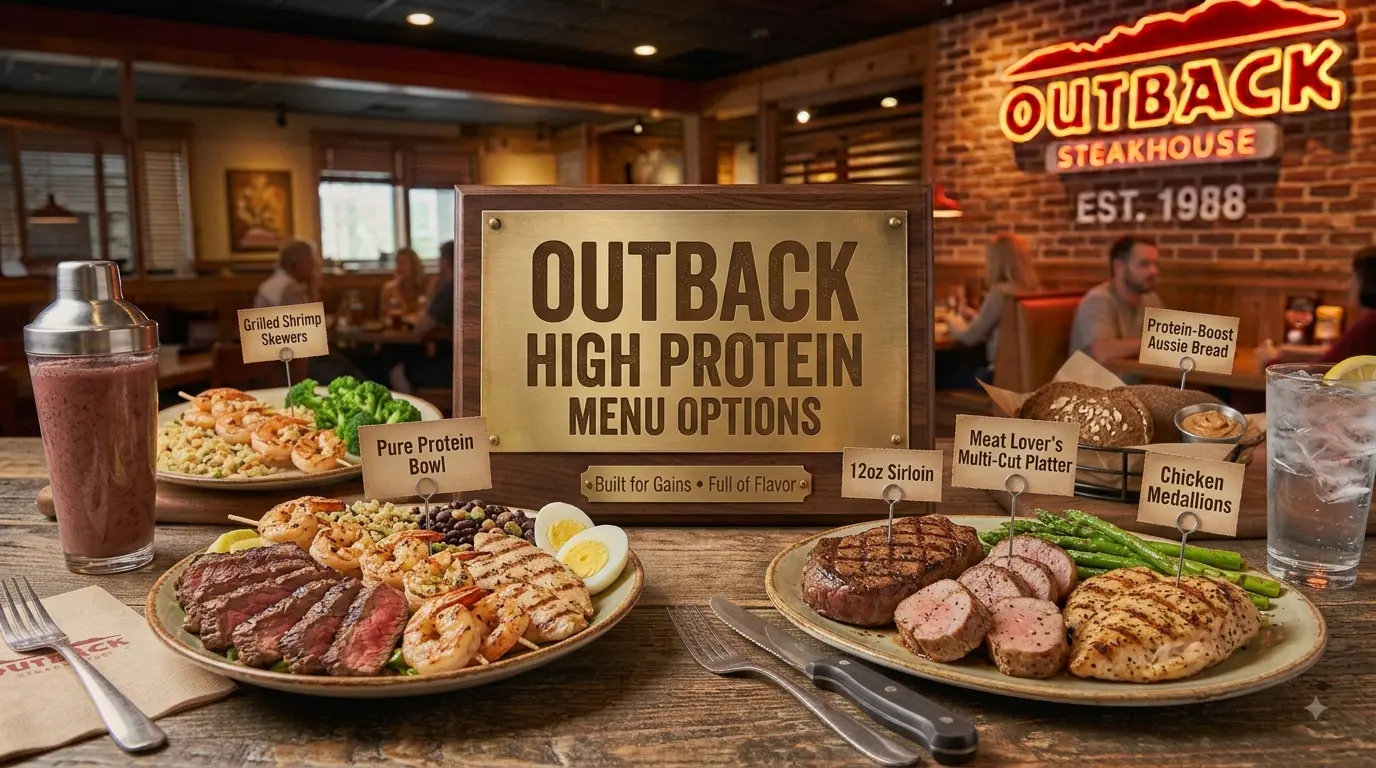
The Outback high protein menu is easiest to navigate when you start with steak, grilled chicken, fish, or shrimp and then build the rest of the plate around your priorities. This independent guide explains which meal styles are worth comparing in 2026, how sides and sauces change the complete order, and where to verify current nutrition details.
Nutrition and location disclaimer: Nutrition values, recipes, portions, sauces, sides, preparation methods, and availability may vary by location and can change. Check the current official nutrition information and your selected restaurant before ordering. This article provides general menu information, not medical or personalized dietary advice.
Quick Answer: What Are the Best High Protein Options at Outback?
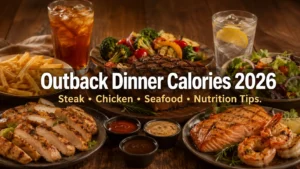
Steak, simply grilled chicken, grilled fish, and grilled shrimp are the most practical protein-forward starting points. A steak entrée often makes protein the center of the meal, while chicken and seafood can be easier to pair with lighter or lower-carb sides. The best choice depends on the available portion, preparation, toppings, and everything served with it.
For a straightforward order, choose one grilled protein, add non-breaded vegetables or a simple salad, and request rich sauces, butter, and dressing separately. Review the Outback nutrition menu guide, then confirm the exact item and serving in the latest official nutrition resource.
Do not assume that the largest entrée is automatically the smartest high protein meal. A moderate portion with useful sides may better match your appetite, calorie target, and budget. The Outback menu price guide can help you compare current menu sections before selecting a location.
High Protein Outback Meal Overview
A protein-forward meal can take several forms. Steak provides a direct option with multiple cuts and portion sizes. Grilled chicken is flexible but may arrive with cheese, bacon, glaze, or sauce. Seafood can offer substantial protein, although breading, seasoned butter, rice, and dipping sauces can change the nutrition profile.
The table below compares meal structures rather than assigning exact protein or calorie claims. Official values should be checked for the named item, selected portion, included sides, and any customization.
| Meal category | Protein-forward approach | Useful side pairing | Details to verify |
|---|---|---|---|
| Sirloin meal | Choose an available portion that fits your appetite | Simply prepared broccoli or seasonal vegetables | Steak weight, cooking fat, seasoning, and toppings |
| Ribeye, strip, or filet meal | Compare protein with total portion size and calories | Vegetables or a side salad with dressing separately | Cut, listed weight, marbling, sauce, and sides |
| Grilled chicken meal | Request a simple grilled preparation when available | Non-breaded vegetables or a plain potato | Marinade, cheese, bacon, glaze, and sauce |
| Grilled fish meal | Keep seasoned butter or rich sauce on the side | Vegetables or a simple salad | Fish species, portion, oil, butter, and glaze |
| Grilled shrimp meal | Choose grilled rather than breaded shrimp | Vegetables in place of a richer side where allowed | Skewer count, rice, butter, dip, and side substitutions |
| Protein-topped salad | Select grilled chicken, steak, or seafood where offered | The salad serves as the main accompaniment | Dressing, cheese, bacon, croutons, and fried toppings |
No exact protein or calorie figures are assigned in this table. Menu names, portions, standard accompaniments, and nutrition disclosures can change, so use it as a comparison framework and verify the current official information.
Best High Protein Steak Options
Sirloin is a useful first cut to compare because it is commonly offered in more than one portion size and can form a simpler plate than a heavily topped entrée. A moderate sirloin with vegetables may suit someone balancing protein with calories, while a larger serving may provide more food than needed.
Ribeye and New York strip are also protein-rich steak choices, but cut size and marbling influence the complete nutrition profile. Filet is another option for diners who prioritize tenderness. Compare the actual listed serving rather than treating every steak cut as nutritionally interchangeable.
The Outback steak prices by cut guide explains how sirloin, ribeye, strip, and filet differ in size, style, and price. Once you choose a cut, confirm its current protein and calorie values in the official nutrition materials.
How to Keep a Steak Meal Protein-Forward
- Pick the steak portion before choosing sides or add-ons.
- Request toppings, finishing butter, or sauces separately.
- Choose non-breaded vegetables when you want a lower-carb plate.
- Count any shrimp, ribs, or other add-on as part of the full meal.
- Check whether the listed nutrition value includes sides and standard preparation.
Best High Protein Chicken Options
Simply grilled chicken is one of the most adaptable high protein choices when it is on the local menu. It can be paired with vegetables for a lower-carb direction or with a potato when a more substantial meal is preferred.
Read the complete item description. Bacon, cheese, creamy sauce, barbecue-style glaze, and fried coating can make two chicken entrées very different in calories, carbohydrates, sodium, and fat even when both contain a meaningful amount of protein.
Lunch portions may offer a practical amount of food for some diners. Compare the Outback lunch menu with prices with the Outback dinner menu with prices, since selections, portions, hours, and availability may differ by restaurant.
Best High Protein Seafood Options
Grilled fish and grilled shrimp can anchor a protein-forward meal without relying on steak or chicken. They also pair naturally with vegetables or salad. Preparation matters: butter, oil, glaze, breading, coconut coating, rice, and dipping sauce can substantially alter the complete plate.
A fish entrée may vary by species, recipe, and portion. Shrimp may be served as an entrée, skewer, or add-on, and those formats should not be assumed to have identical nutrition. Browse the Outback seafood menu guide, then verify the local description and official figures.
If combining steak and seafood, check each component separately. A combination can raise total protein, but it can also increase calories, sodium, sauces, and overall portion size.
Sides to Pair With High Protein Meals
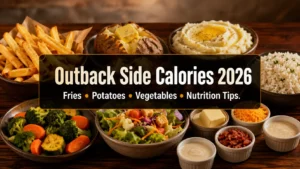
Sides determine whether a protein-forward entrée becomes a balanced, lower-carb, lower-calorie, or more indulgent meal. Non-breaded broccoli or seasonal vegetables are useful options to investigate, especially when extra butter or sauce can be omitted. A side salad can also work when dressing and calorie-dense toppings are controlled.
A plain potato supplies carbohydrates and may suit diners who want a more filling plate, but loaded toppings change its nutrition. Fries, creamy pasta, loaded potatoes, and cheese-topped sides can add substantial calories without increasing protein as efficiently as the entrée.
Questions to Ask About a Side
- Does it come with butter, oil, cheese, bacon, dressing, or sauce?
- Can those extras be omitted or served separately?
- Is a vegetable substitution available at this restaurant?
- Does the official nutrition listing include the standard toppings?
- Will a substitution change the price or portion?
Drinks and Sauces to Choose Carefully
Water, unsweetened iced tea, or plain coffee generally keeps the beverage from competing with the meal for calories. Sweet tea, regular soda, lemonade, cocktails, beer, and wine can add calories and carbohydrates while contributing little or no protein. See the Outback drink menu guide for options, then confirm the current serving and ingredients.
Sauces and dressings deserve the same attention. Creamy dressings, flavored butter, dipping sauces, glazes, and steak toppings can change the calorie, carbohydrate, fat, sodium, and allergen profile. Ordering them on the side gives you more control, but it does not make the amount used calorie-free.
Nutrition goals do not answer allergy questions. Read the Outback allergen menu guide, consult the latest official allergen resource, and speak with restaurant staff about ingredients and cross-contact procedures when relevant.
High Protein vs Low Calorie Choices
High protein and low calorie describe different priorities. A large steak may contain more protein than a smaller portion while also supplying more total calories. Grilled chicken, fish, shrimp, or a moderate sirloin may offer a practical overlap when paired with simply prepared vegetables and controlled sauces.
The cooking method can matter as much as the protein source. Breading, frying, cheese, bacon, butter, glaze, and creamy sauce may turn a protein-rich entrée into a much higher-calorie meal. Conversely, a very light salad without a substantial protein topping may be low in calories but not especially protein-forward.
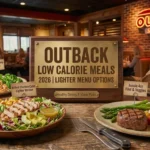
Use the Outback low calorie meals guide when calories are the main priority. Compare its lighter meal structures with the official protein values for the exact portion you plan to order.
Smart Ordering Tips for a Protein-Forward Meal
- Choose a primary goal. Decide whether protein, calories, carbohydrates, price, or portion size matters most for this meal.
- Start with the entrée protein. Compare steak cuts and weights, or select a grilled chicken or seafood preparation.
- Read beyond the item name. Look for breading, cheese, bacon, glaze, butter, and sauces in the full description.
- Build the complete plate. Add the nutrition values for sides, toppings, dressings, sauces, and drinks when they are listed separately.
- Put extras on the side. Control how much sauce, dressing, or butter you use rather than accepting the standard amount automatically.
- Use vegetables for a lower-carb direction. Confirm how they are prepared, since sauces and breading still count.
- Compare lunch and dinner. A lunch-size meal may better match your appetite when it is offered.
- Do not add food only for a protein claim. Consider hunger, overall meal size, and the complete nutrition profile.
- Verify the location. Local menus, portions, recipes, prices, and availability can differ.
If budget matters too, review the cheapest Outback meals for 2026. A lower-priced meal and a high protein meal can overlap, but compare cost and nutrition as separate factors.
FAQs
What has the most protein at Outback?
The answer depends on the current menu, exact item, and serving size. Larger steak portions and combination meals may contain more total protein, but they may also contain more calories and sodium. Compare official nutrition values for the portions available at your selected restaurant.
Is steak or chicken better for a high protein meal?
Both can be protein-forward. Steak varies by cut and weight, while chicken varies by portion and preparation. A simply grilled chicken entrée may make calories easier to manage, while steak offers several portion and cut choices. The better fit depends on your priorities.
Does Outback have high protein seafood?
Grilled fish and grilled shrimp are seafood options worth comparing. Check the official protein value and serving size, and include butter, glaze, rice, sauce, and sides in your evaluation.
What is a lower-carb high protein order?
A grilled steak, chicken, fish, or shrimp entrée paired with non-breaded vegetables can be a useful structure. Ask about marinades, glazes, breading, sauces, and vegetable preparation because each can add carbohydrates.
Which Outback sides have protein?
Some sides contribute a small amount of protein, but the entrée is generally the more direct source. Side recipes and portions vary, so check official nutrition values instead of assuming that cheese or bacon makes a side an efficient protein choice.
Can I make an Outback salad high in protein?
A salad with grilled chicken, steak, or seafood may be more protein-forward than a basic side salad. Dressing, cheese, bacon, croutons, and fried toppings affect the complete nutrition profile, so compare all components.
Are the protein amounts in this guide official?
This guide does not assign exact protein amounts. Use the latest official nutrition resource for the named item and portion, and check whether its values include standard sides, toppings, or sauces.
Do nutrition values vary by location?
They may. Recipes, portions, preparation, sauces, sides, limited-time items, and availability can vary or change. Prioritize the current local menu and official nutrition information.
Sources & Official References
Use these first-party resources to verify current menu names, serving sizes, nutrition details, ingredients, and local availability before ordering. Select a restaurant where prompted.
- Official Outback menu
- Official Outback nutrition resources
- Official Outback allergen resources
- Official Outback locations page
Editorial note: Official pages and local menus can change. This independent guide does not guarantee that a particular item, portion, preparation, or customization is available.